Commissioned after plague and destruction and reverently restored …
The East Window at Carlisle Cathedral
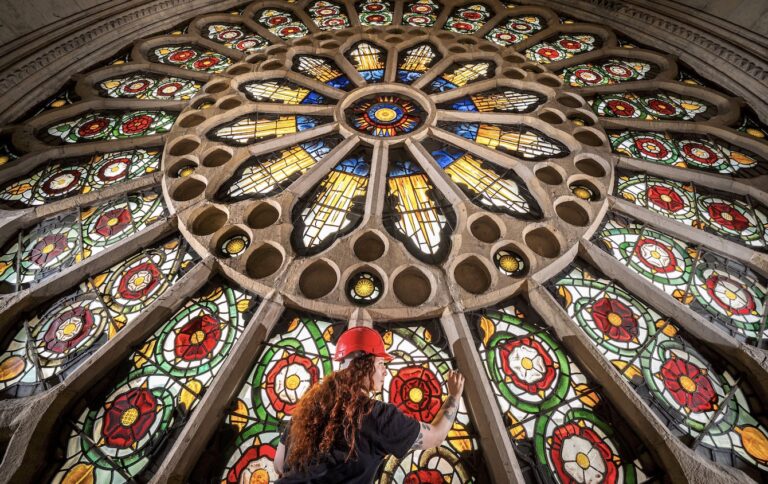
Flowing Decorated tracery with stained glass of the Last Judgement from 1350s, attributed to Ivo de Raughton, lower panes on the life of Jesus by Hardman & Co. of Birmingham (1861), 17.6 × 8 m
The wonderful Curvilinear East Window of Carlisle Cathedral remains one of the largest and most complex examples of Flowing Decorated Gothic tracery in England. Its origins can be traced to the lengthy rebuilding works of the fourteenth century that followed a fire which took place in 1292 – lengthy because of frequent raids on the city by the Scots and because of recurrent outbreaks of the Black Death that killed at least a third of Carlisle’s population.

In 1359 John de Salkeld, a yeoman from Little Salkeld, near Penrith, donated 40 shillings ‘to make a window anew in the chancel’. The upper, medieval section of the surviving window is attributed to Ivo de Raughton and depicts the Last Judgement, a popular subject in the Middle Ages. Most of the lower glass of the window had disappeared by the mid-eighteenth century and been replaced by plain glass with a coloured border; there is no record of what imagery may originally have been on display.
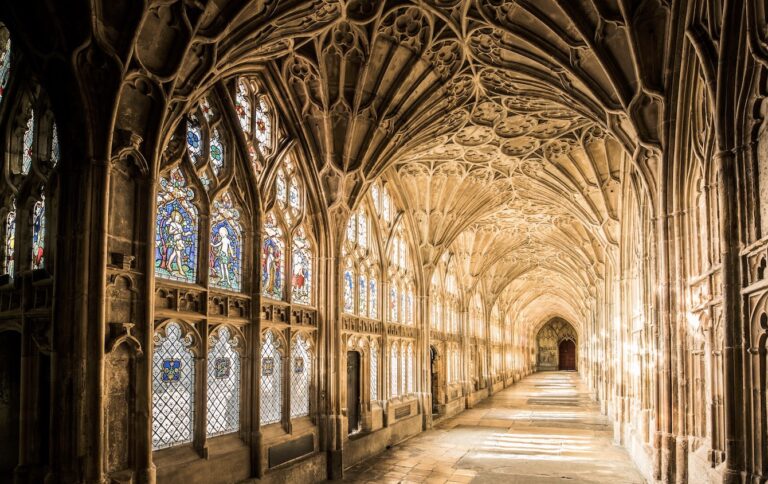
By the mid-nineteenth century restoration work was urgently required, with the window tracery being described as ‘in a bad state in every respect’: ‘the glazing is so greatly dilapidated that in bad weather the rain pours in’. In 1861 Hardman & Co. of Birmingham were commissioned to refill the lower panes in memory of Hugh Percy, Bishop of Carlisle (1784–1856). The glass imagery depicts the life of Jesus.
Read more about all the windows in our campaign here.
You can buy the book, Divine Light – The Stained Glass of England’s Cathedrals here.