Older than the Bayeux Tapestry
Among the treasures of Durham Cathedral Museum are some of the oldest surviving embroideries in England. Known today as the Cuthbert Embroideries, they were made in the early 900s, centuries before the Bayeux Tapestry, and they offer a rare glimpse of craftsmanship more than 1,100 years old.
We know who commissioned them because she signed her work. The name of Queen Aelfflaed is stitched on the back. The embroideries were given to the shrine of St Cuthbert by her stepson, King Athelstan, when he visited it at Chester-le-Street in 934.

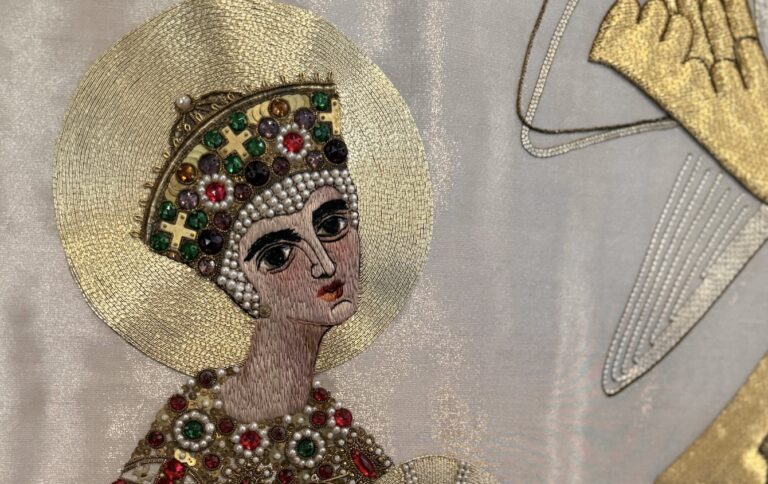
They are among the earliest surviving Saxon embroideries in England and the only ones to feature full-length human figures. The maker or makers even labelled the prophets and apostles, so we know who each figure is. The work is a type of needlework known as Opus Anglicanum, or “English Work”, which was then the finest and most skilled embroidery in Europe and in great demand.
The embroideries are vestments that would have been worn by a priest: a stole, or long scarf; a maniple, worn on the arm and used to wipe the altar vessels; a girdle, or belt; and two embroidered “bracelets”, strips of cloth that would have been sewn onto the cuffs of a garment. A second maniple appears to have begun life as a girdle, and was cut in half and stitched together along the long edge to make it wider.
When James Raine opened Cuthbert’s tomb in 1827, the textiles were found placed on the saint’s body, just as they would have been worn in life.
Their survival is remarkable. Most textiles of this kind were burnt once they became too worn to use, so that the gold and silver in the threads could be melted down, recovered and reused. These were spared, and they remain richly embroidered and beautifully preserved.
The Cuthbert Embroideries show how a cathedral’s textiles can carry a story across more than a thousand years, from a queen’s commission to a saint’s shrine and now to the museum. They are a reminder that the makers of the early 900s were among the finest in Europe.
Visitors can see these extraordinary treasures up close in Durham Cathedral Museum.
See all of wonderful Threads of Faith entries here.