The Medieval Ceiling in Stitches. Nine centuries of heritage, stitched by hand.
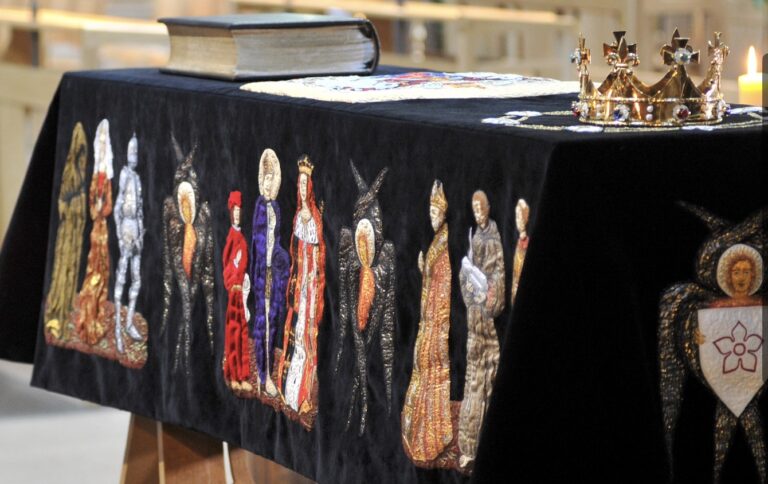
Look up in the Nave of Peterborough Cathedral and you will see one of England’s most important surviving medieval decorative schemes: a painted ceiling dating from the thirteenth century. Now, thanks to hundreds of volunteers, it can be seen in thread too. The Cathedral’s monumental needlepoint interpretation of the ceiling took eight years and more than 1.5 million stitches to complete.

Kings, bishops and saints appear alongside the Seven Liberal Arts and a vivid bestiary of fantastical and humorous creatures. The finished embroidery measures 12 ft 2 in, approximately four metres.
The project began in 1986, when local supporter Mrs Freeman commissioned the Royal School of Needlework to create the work. It remained unrealised after her death in 2008. In 2018, the Cathedral’s 900th anniversary, the materials were gifted to the Cathedral, and a legacy commission became a community endeavour.
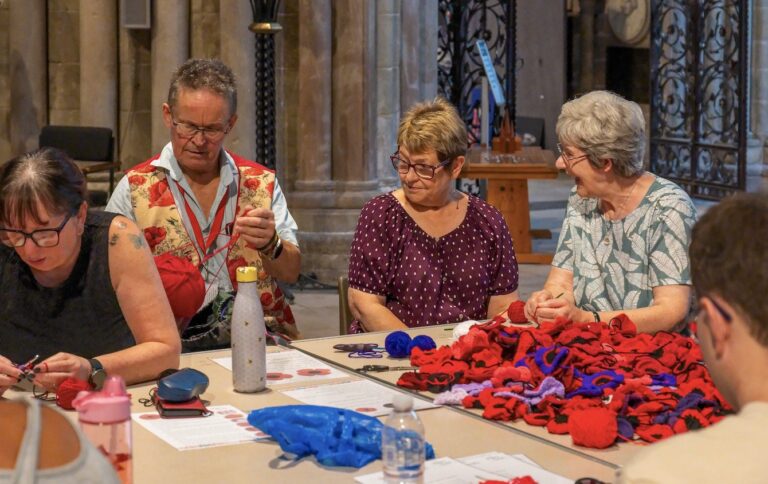
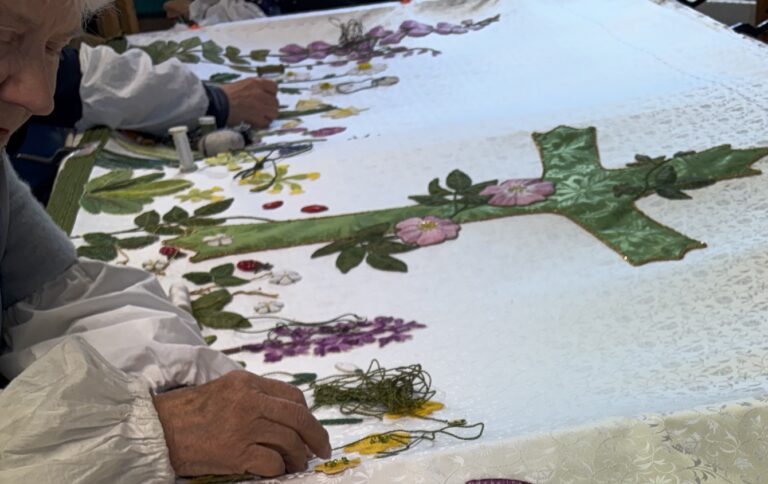
Seven volunteers began stitching in May 2018, and a core group of 30 regular makers grew around them. Working on fine canvas at 18 threads per inch and guided by William Strickland’s 1849 lithograph, they recreated and refined the ceiling’s intricate imagery with patience, precision and shared purpose.
There were technical challenges early on, and estimates suggested the work could take 70 years. The volunteers finished it in eight. The embroidery was unveiled at the Cathedral earlier this year, a celebration of exceptional craftsmanship and of the lasting power of community participation.
The Very Reverend Chris Dalliston, Dean of Peterborough, praised the volunteers’ “great patience, commitment, skill and love” in shining new light on the Cathedral’s unique medieval artwork.
The Cathedral is now considering permanent display, which would create a long-term legacy to honour the makers, deepen public engagement with its heritage and inspire future generations.
The Medieval Ceiling in Stitches shows cathedral textiles at their most ambitious. It carries a thirteenth-century artwork into a new medium, and it proves what a community can achieve when it commits to a shared task. Like the great embroideries of earlier generations, it will outlast its makers and keep their work in view.
See all of wonderful Threads of Faith entries here.
Images credit: Paul Marriot