A wooden memorial cross for Captain Francis “Toby” Dodgson, a cousin of author, Lewis Carroll, went back on display in the Cloisters at Salisbury Cathedral today (Wednesday 11 November), after being rededicated at the French battlefield where he died.

Captain Dodgson enlisted in August 1914 with his brothers Philip and Guy. The family were cousins of Charles Dodgson, better known as the author Lewis Carroll. Toby was commissioned as a Second Lieutenant in the Yorkshire Regiment, and was killed at Contalmaison, France, on 10 July 1916 during the Battle of the Somme.
The cross was made by Salisbury Cathedral’s Works Department in 2016 to replace the original, which was stolen. It had marked the place where he fell.
On 10 July this year, the 110th anniversary of his death, the family took the cross to Contalmaison. A memorial service was held there with representatives of the Yorkshire Regiment, the local mayor and a volunteer from The Western Front Association, which organised the ceremony.
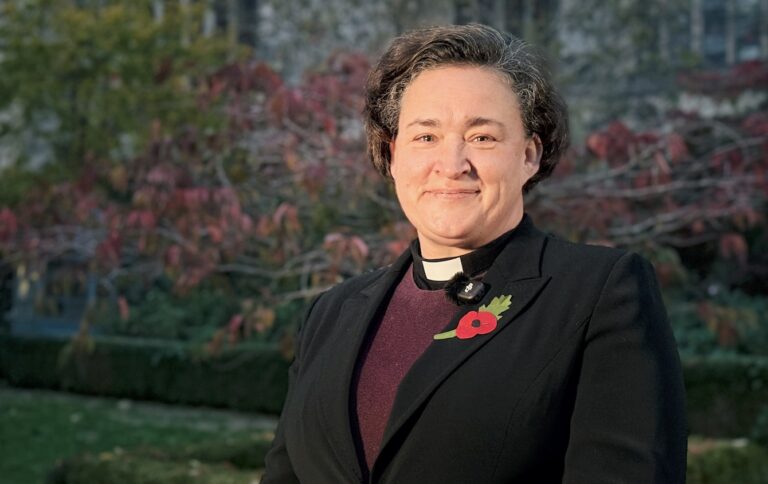
The cross now carries preserved soil from the Somme. It was blessed at a family ceremony led by the Canon Treasurer, the Revd Neil Traynor, before returning to the Cloisters.
Philip Pollard, Captain Dodgson’s great-nephew, said:
“My great-grandmother brought the original battlefield cross back to her home in Salisbury as a permanent reminder of her son Toby, who paid the ultimate price in the service of his country. I am very grateful to the Cathedral Works Department for making a replica.
“When the memorial stone was rededicated in Contalmaison, close to where Toby fell, it seemed the ideal opportunity to take the replica there and give it the provenance of the original. Now it is back on display in the Cloisters, complete with mud from the Somme. I hope it will continue to remind people of the sacrifice of Toby, his brother Guy and so many others who gave their lives for freedom.”
Wooden crosses were the usual grave markers in the First World War. A small group of Red Cross workers began organising burials and recording grave positions, and this work later became the Commonwealth War Graves Commission. Most crosses were later replaced by permanent headstones, but families of soldiers whose crosses had been identified could apply to receive them.