‘The opening of the Community Wellbeing Garden at Rochester is a significant moment. My famous rose-growing predecessor, Dean Reynolds Hole, believed in the vital importance of being in close contact with nature.
‘Literally ‘growing together’, he thought, would break the divisions which separate us from God and neighbour.’
The Dean of Rochester, the Very Revd Philip Hesketh.
Rochester Cathedral Appoints Garden and Music Wellbeing Coordinators to Grow It’s Community Programme
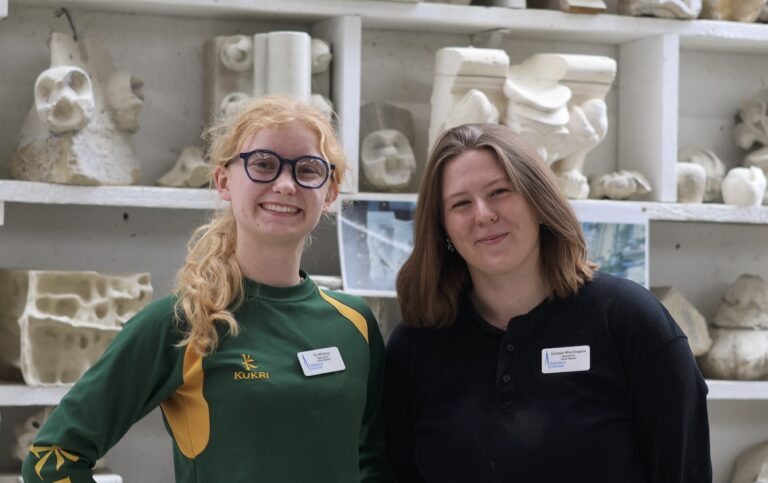
Rochester Cathedral has appointed two new wellbeing posts, a Garden Wellbeing Coordinator and a Music Wellbeing Coordinator, to work side by side in supporting the health and wellbeing of the communities it serves.
Both posts are funded for the next three years.

The appointments build on the restoration of Rochester Cathedral‘s secret gardens and the opening of the new Community Wellbeing Garden at the end of September. The medieval gate in the historic city wall has also been reopened, improving access to the gardens. Together, the posts will combine gardening and music in a wellbeing programme that also draws on the arts.
The gardens began as a project during lockdown, led by the Dean of Rochester, the Very Revd Philip Hesketh, to honour one of his predecessors, Dean Samuel Reynolds Hole. A celebrated Victorian horticulturalist and founding president of the Rose Society, Dean Hole was Dean of Rochester until his death in 1904. He laid out a garden at the Deanery and planted a rose collection of 135 varieties. His book A Book About Roses, written in 1869, did perhaps more than any other publication to popularise the rose in English gardens, and earned him the title “Rose King” from the poet laureate, Alfred, Lord Tennyson.
The garden designer Gertrude Jekyll was a regular visitor and was so impressed that she included it in her book, Some English Gardens with paintings by George S Elgood. The original watercolour is now part of Dean Philip’s collection of Dean Hole’s artefacts.
Dean Philip said:
“He was known as the ‘king of the roses’ and I learned he once had a remarkable garden at the Deanery in Rochester. I wanted to restore the former gardens and reinstate his rose garden, as well as the older varieties of flowers he introduced.”
That work has transformed three acres of hidden gardens behind the Cathedral. Some of Dean Hole’s favourite roses, including Gloire de Dijon, have been reinstated, alongside a wildflower meadow, a fruit orchard, beehives, recreated ponds, a small vineyard and an infirmary herb garden that echoes the agricultural history of the Cathedral’s monks.
Three cherry blossom trees from Japan form part of a project linking the two countries, and a community growing space is planned for the future.
At the heart of the project is a museum dedicated to Dean Hole, with artefacts collected over the years by Dean Philip, and a life-sized plaster figure of Dean Hole waiting to be cast.
The gardens are already used by local community groups. Veterans have reinstated a summer house and decorated it with their own stained-glass artwork, while a dementia group and a local care home use the space for singing and simply being out in nature.
Dean Philip said:
“The opening of the Community Wellbeing Garden at Rochester is a significant moment. My famous rose-growing predecessor, Dean Reynolds Hole, believed in the vital importance of being in close contact with nature. Not only was this beneficial to a person’s physical and spiritual health, but it also helped form community.
‘Literally ‘growing together’, he thought, would break the divisions which separate us from God and neighbour.
‘The Wellbeing Garden will hopefully do just that by bringing people together in a common activity in a green and pleasant space. The very completion of this project has already brought together so many different people and groups, creating new relationships and networks.”
He added: “I feel I have prepared the ground for this exciting and essential project to go forward, which will help build communities of hope.”
More about Dean Hole and his roses can be found in Dean Philip’s blog here.