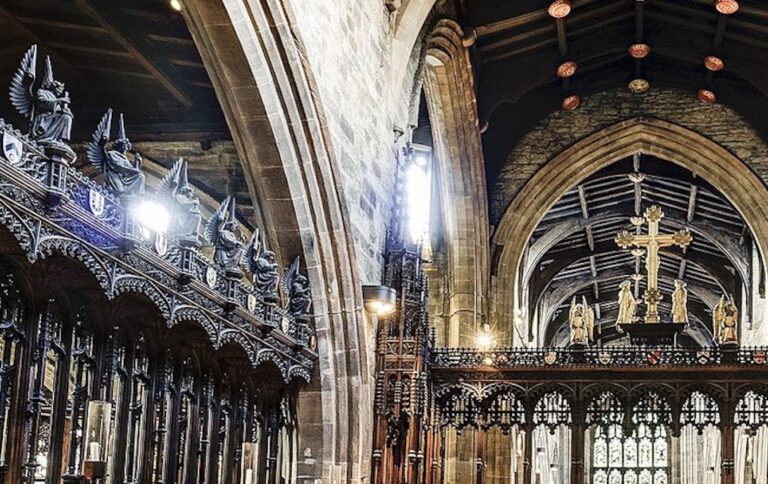
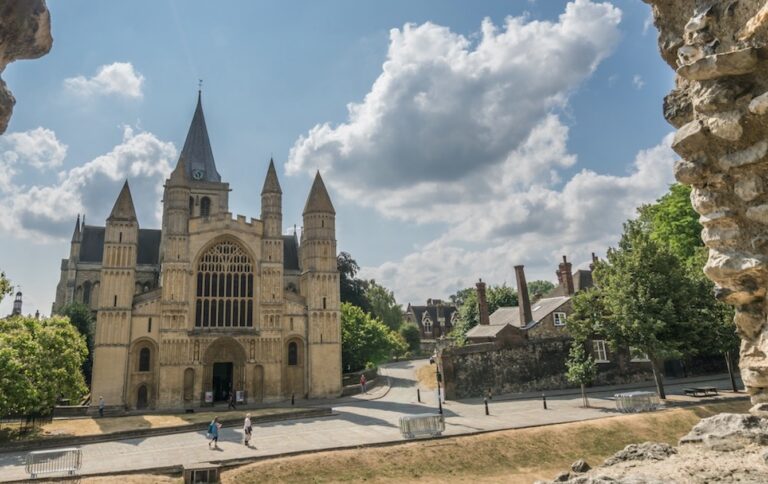
Southwell Minster is seeking urgent financial support to keep its doors open after decades of underinvestment.
The underinvestment has left it needing around £20m to safeguard its historic building and grounds.
Southwell Minster seeks urgent funds to stay open as MP warns of possible closure
The Dean of Southwell, the Very Rev Dr Stephen Evans, said the cathedral does not have the money needed to maintain it and discussions were underway with the Church Commissioners, the Charity Commission and other agencies.
In a statement, Dr Evans said:
“Chapter does not have £20 million. Indeed, Chapter’s resources are almost completely exhausted.”
He said the Church Commissioners contributed towards clergy costs and some staff salaries but did not fund the upkeep or repair of the cathedral building or land. This left the Chapter, the body responsible for running the cathedral, heavily dependent on income from visitors, worshippers, events, its shop and restaurant.
“If the Grade I-listed Cathedral Church, Southwell Minster, is to keep its doors open, Chapter has to seek additional sources of funding urgently,” he said.

Southwell Minster is seeking urgent financial support.
The warning follows an intervention in the House of Commons by Newark MP Robert Jenrick, who asked for help securing emergency support from the Church Commissioners.
Jenrick warned that the cathedral could have to close next year without assistance, and appealed to Commons Leader Sir Alan Campbell to press the Church Commissioners to help.
Campbell said he would raise the situation with the Second Church Estates Commissioner.
In a separate post on X, Jenrick called for greater support for cathedrals and parish churches, alongside government action to reduce repair costs.
“Our cathedrals are amongst the greatest achievements of our civilisation. It’s our duty to cherish and hand them to future generations intact,” he wrote. “Sadly, many are struggling financially with crippling backlogs of repairs.”
He described Southwell Minster as facing “the worst financial crisis in centuries”, adding: “There’s even the real possibility that it might have to close its doors.”
Jenrick also called on the Government to reinstate VAT relief on repairs to listed places of worship in the forthcoming Budget.
Dr Evans said Southwell’s difficulties reflected a wider problem, with around a dozen English cathedrals facing similar circumstances. He said Jenrick’s parliamentary intervention was “very timely”, not only for Southwell Minster but for other cathedrals struggling to fund their upkeep.
The cost of keeping cathedrals open
Running costs vary widely. Cathedrals such as Canterbury and York Minster cost around £30k a day to run, while smaller cathedrals such as St Albans costs around £6k a day and Worcester around £8k. Southwell Minster estimates it costs £3.6k a day to run.
Anna Pitt, the executive director for English Cathedrals (AEC) said the funding model was understandably unclear to the public, but that behind an illusion of wealth lay a reality that is increasingly hard to sustain.
‘Cathedrals receive no statutory government funding, only modest distributions from the Church Commissioners for clergy stipends and some staff costs. They rely instead on donations, legacies, grants and the income they generate themselves, and all have to be creative in building an economy around them, particularly as rising employment, utility and cost of living bills hit everyone. ’
York Minster, for example, has just switched on 184 solar panels on its roof, which will provide a third of its energy requirement, saving money and marking a significant step towards decarbonisation.
Cathedrals employ 6,000 people across the sector, welcome nearly 10 million visitors each year and are open 365 days a year, offering worship, sanctuary, warmth and hospitality. All of this comes with the costs of fabric maintenance, utilities, good employment practice and compliance.
Research published earlier this year from THEOS, Living Stones, commissioned by the AEC and the Church Commissioners, found that cathedrals remained institutions capable of connecting with 74% of the nation while also finding that 80 per cent of them faced structural deficit.
England’s cathedrals include UNESCO World Heritage sites, and many are Grade I listed. They stand at the heart of the nation in times of national sorrow or celebration.
They are home to the tombs of kings, queens and princes and hold the shrines of saints. They also care for some of the country’s most unique treasures, from the Mappa Mundi and copies of Magna Carta to ancient texts.
Southwell Minster itself is home to the Leaves of Southwell, a celebrated 13th-century collection of naturalistic foliage carvings in its chapter house.
The Leaves of Southwell were voted #1 in the Association of English Cathedrals’ prestigious #CathedralTreasures competition in 2024. Attracting over 4,500 public votes. Find out more>>
Only ten cathedrals, plus the two Royal Peculiars of Westminster Abbey and St George’s Chapel, Windsor, charge an entrance fee. All cathedrals remain free to enter for worship, prayer and to light a candle.
The AEC said it is working with cathedrals on new initiatives to drive collective efficiencies, including shared resources, shared best practice and centralised procurement, delivering what the 42 cathedrals cannot achieve alone.
It said the sector has a collective ambition and a unique offer to the nation that makes the current financial challenge surmountable. Cathedral teams, it added, take seriously their role as “custodians for a generation”.