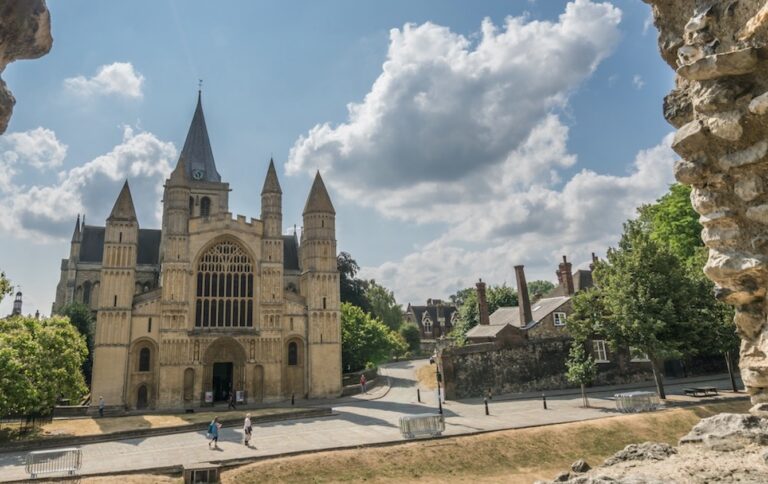
Each November, England’s cathedrals open their doors for Remembrance Sunday and Armistice Day.
They offer a shared space for silence, ceremony and quiet reflection.
Stone, Silence and Remembrance
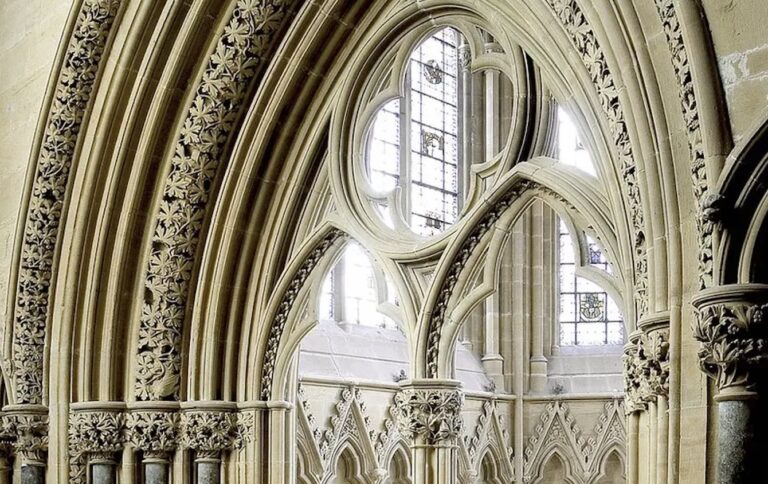
Every November, England’s cathedrals take on a particular stillness. The great naves, usually busy with visitors, choirs and the rhythms of daily worship, become places where a whole community comes to stand quietly together.
This Remembrancetide, as in every year, they offer something increasingly rare: a shared space in which to remember.
Remembrance Sunday falls on 8 November this year, and Armistice Day follows on Wednesday the 11th, when the nation will observe the two minutes’ silence at 11am. Across the days around these dates, cathedrals from Truro to Carlisle open their doors to congregations, civic leaders, veterans, serving personnel, cadets and families.
The services differ in detail, but the shape is familiar: the Last Post, the two minutes’ silence, the laying of wreaths, the reading of names. In some cathedrals, thousands of poppy petals will drop from the tower; in others, the stone will light up red, hundreds of knitted poppies will adorn the walls, or poppies on little wooden crosses will be pressed into the grounds.

People return year after year to the same ritual, and our cathedrals are well placed to welcome them.
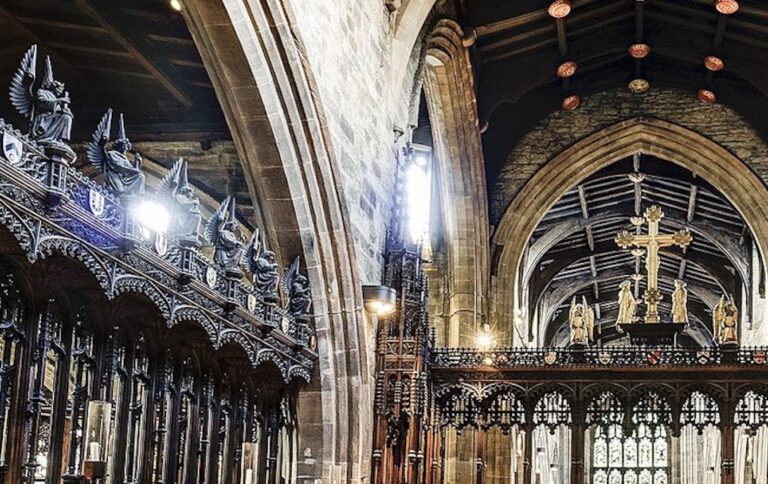
English cathedrals have been holding the nation’s grief for centuries. Their walls carry the memory of regiments, with faded colours hanging high above the aisles, and of individual families, with brass plaques and carved memorials recording sons, daughters, husbands and friends lost in conflicts from the Napoleonic Wars to the present day. Remembrance is something continuous, a thread running through generations rather than a single moment confined to one century.
Some cathedrals carry that history in especially visible ways. Coventry, its medieval church destroyed in the bombing of November 1940, preserves the ruined shell beside the modern cathedral, and its message of reconciliation has travelled the world through the Community of the Cross of Nails. It is a reminder that remembrance is not only about loss but also about the hard work of peace.
Not everyone who comes is a churchgoer, and not everyone who comes has a name to remember. Some come simply because it feels right to be among others, in a place that has room for whatever they bring.
That openness matters. Remembrance in a cathedral is not reserved for one tradition or one story. People of all faiths and none gather, as do those whose families served and those whose families suffered, and those who simply feel the weight of the day. The building holds them all alike.
So this Remembrancetide, if you can, step inside your nearest cathedral. Attend a service, light a candle, read a name in the Book of Remembrance, or simply sit for a while. The stone has stood long enough to know how to listen, and it is a good place to say what we owe to those who are no longer here.
Built of stone, alive with remembrance.
Photo : Ripon Cathedral lit up in red for Remembrancetide 2018, Centenary of the Armistice and the end of the First World War.